A summer beach in Cardiff Bay… and a little bit of history


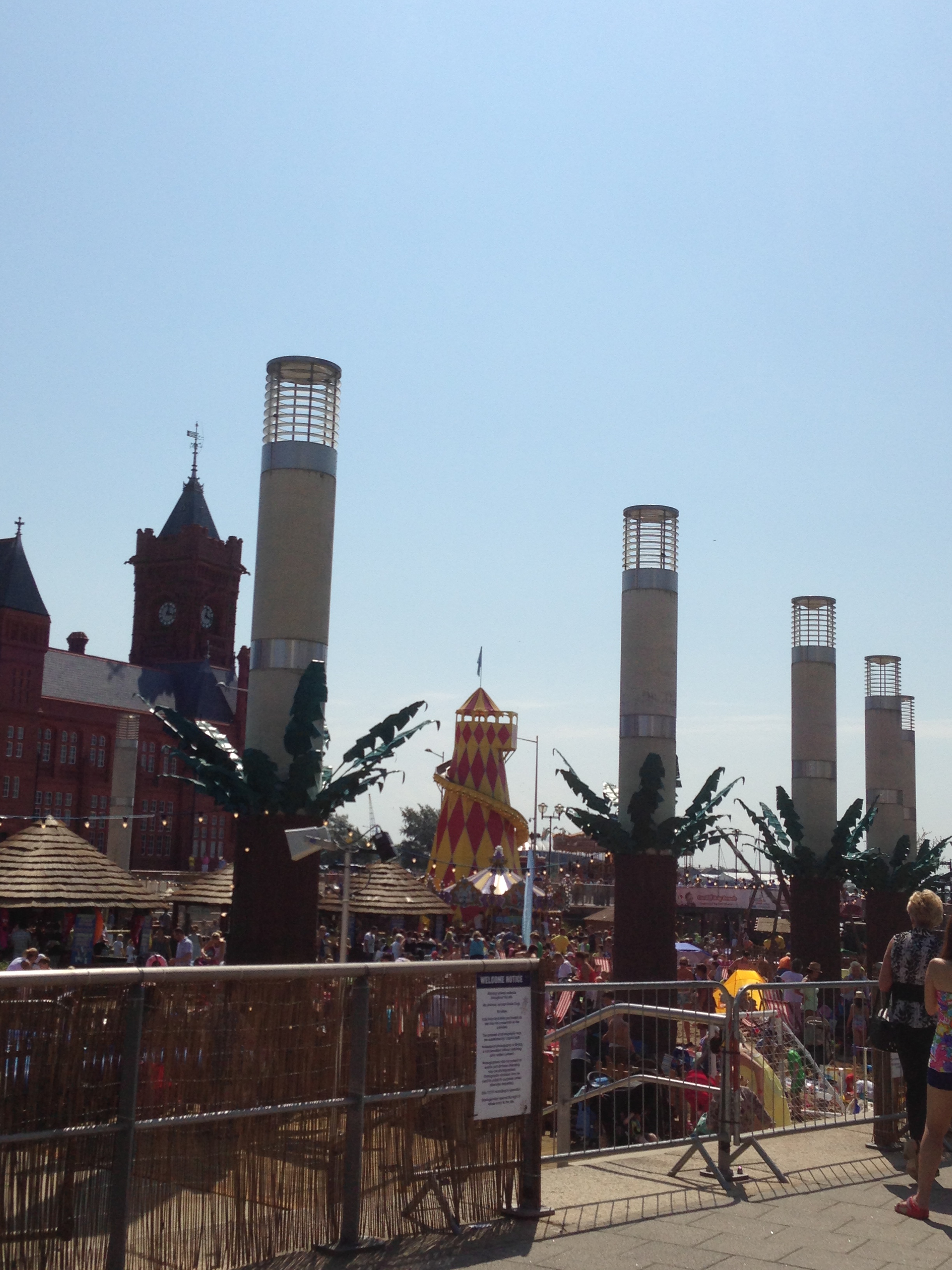
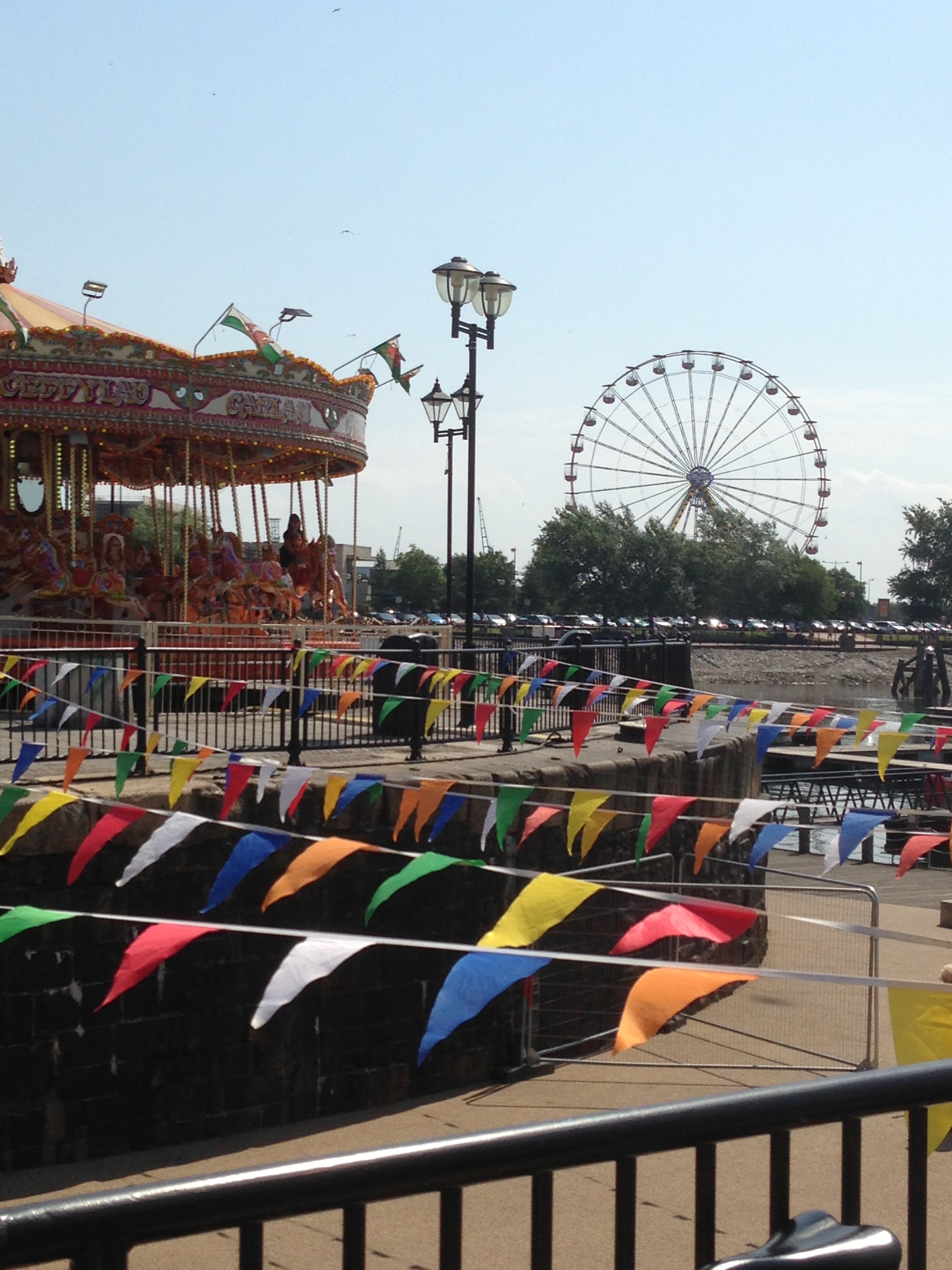
According to statistics, the summer of 2013 is the best in the UK for seven years. Making the most of the lovely weather is the Cardiff Beach, a new attraction that has transformed Roald Dahl Plass in Mermaid Quay.  There are live bands, lots of eating places, traditional seaside rides and stalls, for the energetic amongst the crowds there is also beach volleyball in the specially created beach area. The atmosphere was fantastic the day we visited, everyone seemed to be having lots of fun.
Cardiff Bay 2013

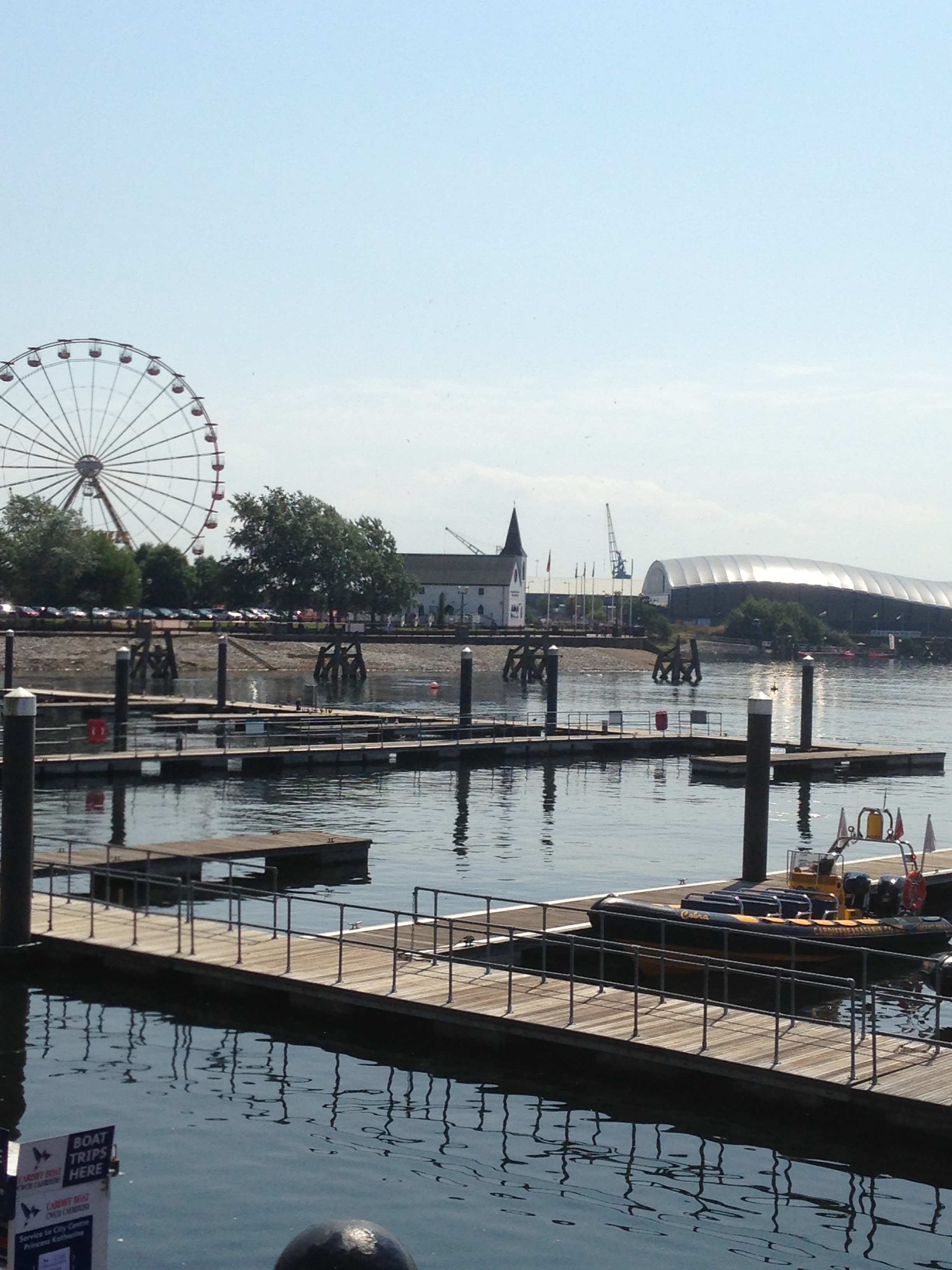
Cardiff Bay 2013

IMG_0156

Cardiff Bay Fair 2013

A little bit of history…

Across the water, you can see the tiny Norwegian Church. In the 19th century, Cardiff was one of largest sea ports in the world. Ships from Norway transported Scandinavian timber to South Wales, for use  in the mines as pit props, they would then take back coal to Norway. To serve the religious needs of the Norwegian sailors and many expats who came to live in and around the dock area, The Norwegian Church was founded by Carl Herman Lund from Oslo in 1868, on land donated by the Marquis of Bute at the entrance of Bute West Dock. It became known as “The Little White Church” a well-known navigation point and home from home for sailors.

The Church also acted as a seaman’s mission, offering food and shelter, Scandinavian newspapers, magazines and facilities for them to write letters to loved ones back home. During WWII many Norwegian seamen could not return to their homeland as it was occupied and as many as 70,000 Scandinavians were said to have worshipped in the little church every year.

In the 1950’s shipping trade had moved away from Cardiff and the mission’s work was discontinued. Eventually, in the early 1960’s the Norwegian Seamen’s Mission withdrew its patronage and the church was closed. It was finally de-consecrated in 1974.

But, that’s not the end of the story.

With the planned development of Cardiff Bay in the late 1980’s, the proposed building of new roads around Atlantic Wharf threatened the destruction of the now derelict and vandalised church. The community however, was not prepared the see the little  church demolished and so the Norwegian Church Preservation Trust was formed to try to save the building and have it relocated to another part of the dock. The children’s writer Roald Dahl, who was baptised in the church in 1916, became the first President of the Trust.  In partnership with the Norwegian Support Committee in Bergen, the trust raised over £250,000 which enabled the church to be dismantled in 1987.  It was preserved and stored pending reassembly on its new site. The remaining original features were rescued, the pulpit, one side window, the chandelier and the model ship were all returned to the church.

In the early 1990’s reconstruction of the church began, on land gifted by Associated British Ports.  In April 1992 the church was re-opened by Princess Martha Louise of Norway in a ceremony attended by VIPs and local people who were  delighted that the doors to the “Little White Church” were open once again.

Today, after considerable refurbishment, including the gift of external wooden decking by the town council of Hordaland, the centre now offers exhibition space in the Dahl gallery, a great coffee shop and function rooms used for weddings, concerts and other events. You can find more information here

The Convict


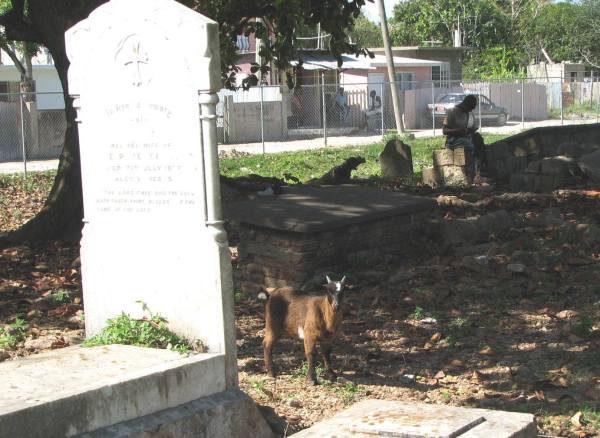
This week’s photo prompt comes courtesy of Randy Maizie.  Your mission, should you choose to accept it, is to write 100 words on whatever the photo suggests to you. All submissions are scutinised by our leader Rochelle Wisoff-Fields aka Mrs Phelps and enjoyed by all the other Friday Fictioneers.   Good luck!


goats_and_graves_3_randy_mazie


Genre: Historical Fiction

Word Count: 100

The Convict

After eight gruelling months, the Barossa reached Hobart.

Released from their shackles, the prisoners staggered on deck for the muster.  Richard stood quietly. There was no escaping the unyielding heat of the southern sun.  Briefly he envied those who had died in their chains.

The charge was murder; lacking evidence the gallows were exchanged for penal servitude.  He was innocent; friends and family knew it and it pained him to accept that he would never see them again.

He laboured hard, eventually receiving his ticket. His homeland forbidden him, Richard settled in Van Diemen’s Land and died there aged 56.


This is based on the research I have been doing on my family tree.  I have an ancestor who was transported to Van Diemen’s Land – present day Tasmania – accused of murdering a special constable who was trying to quieten a mob during a Chartist riot. Richard was found guilty, based on the evidence of someone who remembered ‘a tall lad in a brightly woven cap’. He escaped the gallows only to endure transportation for life. He was 21. Forbidden ever to return home, he made a life in Hobart.

For more information on Convicts in Australia 


Standing Still


Thanks this week go to Sarah Ann Hall for her photograph entitled “Aqueduct” and to the wordsmith Rochelle Wisoff-Fields for continuing the Fabulous Friday Fictioneers.

aqueduct-sarah-ann-hall

Genre: Romantic fiction

Word Count: 100

Standing Still

…In the distance, the spectacular Pont du Gard, a reminder of the Romans’ talent for engineering, built centuries ago to carry water from the springs at Uzes to the Roman garrison in Nimes.

I switch off my voice recorder. It’s early and hot, what exactly am I doing here? I should have ignored Sally’s advice to get back to work; she was wrong, I’m not enjoying it!

I enjoyed having a husband. Now I feel directionless, insular, empty, separate.

The air changes, becomes still. I can sense Adam is beside me.

I relax and breathe the sweet fragrance of life.

A Family Tree


Once again we fire up our little grey cells and try to come up with a germ of an idea.  An idea that will grow into another piece of fiction fit for Friday Fictioneers.

Thanks to Rochelle Wisoff-Fields for her dedication and time, keeping Friday Fictioneers growing straight and true.

Courtesy Scott Vanatter, permission-copyright Indira

Courtesy Scott Vanatter. Permission-Copyright Indira

Genre: Fiction

Word Count: 100

A Family Tree

After the war we had nothing. Stripped of our possessions, we wandered the land searching for food, shelter, kindness. Maria, mourning her child, lost her mind. Men found her dancing in the field and amused themselves, then fearful of the consequences, tied her to a tree and left her.

“This can’t be true, who would do this?”

We found her after animals and birds had fed, we buried her.

“It happened” said the genealogist, handing me more yellowing pages, “there is a gravestone, with details.”

That night, the dream came again; a tree tied with red ribbons.

Now I understand.


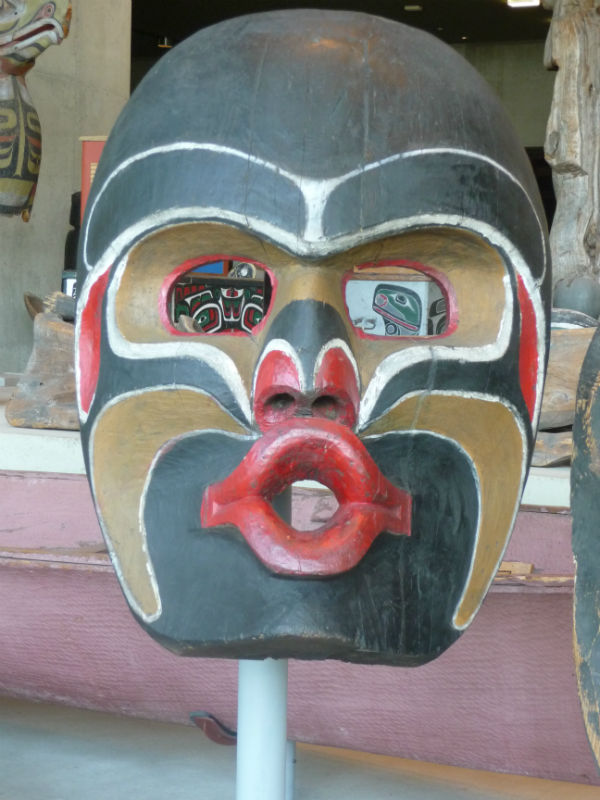
First Nations Art in the Museum of Anthropology Vancouver


On our visit to Vancouver, we took a trip out of town to the Musuem of Anthropology on the University of BC Campus.  It isn’t on the normal tourist trail, but if you get the chance it is a place you must visit.

The staff were incredibly helpful and very knowledgeable; the site is very well set out and signposted.  All the exhibits are clearly detailed and there is so much to see that by the time I had reached the bottom of the ramp at the start of our visit, I had run out of adjectives!

These are some of the wonderful, clever, amazing and awe-inspiring things we saw there….

A collection at the bottom of the ramp

In the Koerner European Ceramics Gallery a tile stove from 1500-1600

and finally, in the Bill Reid Rotunda, my favourite “The Raven and the First Men”


The Raven and the First Men depicts human creation according to Haida legend and was commissioned by Walter and Marianne Koerner for the Museum. Bill Reid took two years to carve this amazing work from a giant block of laminated yellow cedar and it was dedicated on 1 April 1980.

The view through Anne Boleyn’s orchard


After our Murder Mystery weekend, it seemed quite appropriate on our way home, to stop off and visit Hever Castle, the childhood home of Anne Boleyn. I was surprised to learn that most of what the visitor sees today is the result of the work carried out by the wealthy American businessman, William Waldorf Astor.  He bought the castle in 1903 and spent a lot of his fortune restoring Hever, even building a village in the Tudor style, connected to the rear of the castle by a covered bridge, so that his friends and family could stay there in comfort, whilst filling the castle with antique portraits and furniture.

The castle sits in such a peaceful setting and looking at it, through what the guidebook told me was Anne Boleyn’s orchard, I wondered just how much of what is there today would be familiar to her and decided, sadly, that the answer is probably not much.  Anne became Henry VIII’s second wife and although Queen for just 1000 days, it was his love for her and her refusal to become his mistress that led to some of the most tumultuous events in British history.  It is also what continues to bring visitors to Hever Castle in their thousands every year.

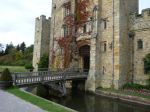
Hever Castle

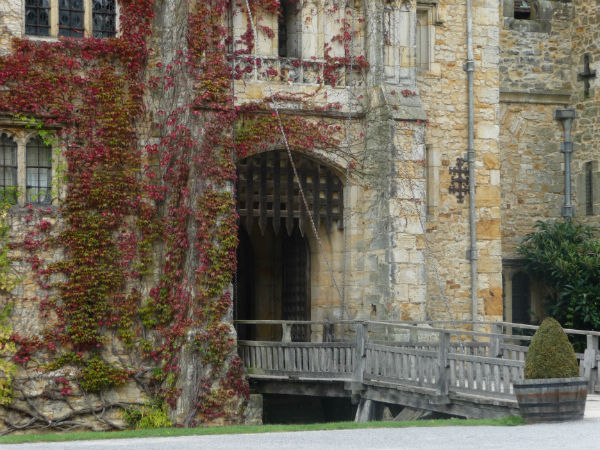
Drawbridge

Drawbridge and moat

The courtyard

A view of the Tudor village

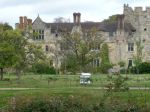
A view of the castle through Anne Boleyn’s orchard